Bicheno Penguins: What You See
The little penguins of Bicheno: the smallest penguin, coming ashore at dusk to their burrows, chicks and the moult, the private rookery, and the rules for watching them.
On the Bicheno penguin tour you watch little penguins, the smallest penguins in the world, come in from the sea at dusk and walk up through a private rookery to their burrows, from lit paths a short way off. Depending on the month you may see birds courting, digging, feeding chicks or moulting. The tour is Tasmania: Bicheno Penguin Tour, from US$53 a person (checked November 2026), with 47 reviews.
The calendar above is the Bicheno penguin tour (checked November 2026).
The short answer
You see wild penguins doing what they do every evening: gathering offshore, landing, and making their way home to their burrows. The operator describes it as watching little penguins in their natural environment, and says the length of the tour depends on when the penguins arrive. What it adds is access to a private colony after dark, lit paths in a colour range chosen to suit the penguins, and a guide who explains what you are watching.
The little penguin
The little penguin, Eudyptula minor, is the smallest of all penguins: NRE Tas, Tasmania’s Department of Natural Resources and Environment, says adults weigh about a kilogram, stand about 40 cm tall and live six years on average. Most of Australia’s little penguins live in Tasmania, though less than 5 percent of the Tasmanian population is on the main island; the rest is on offshore islands. You will hear them called fairy penguins and, on the operator’s own pages, little blue penguins; NRE Tas uses little penguin.
Coming ashore at dusk
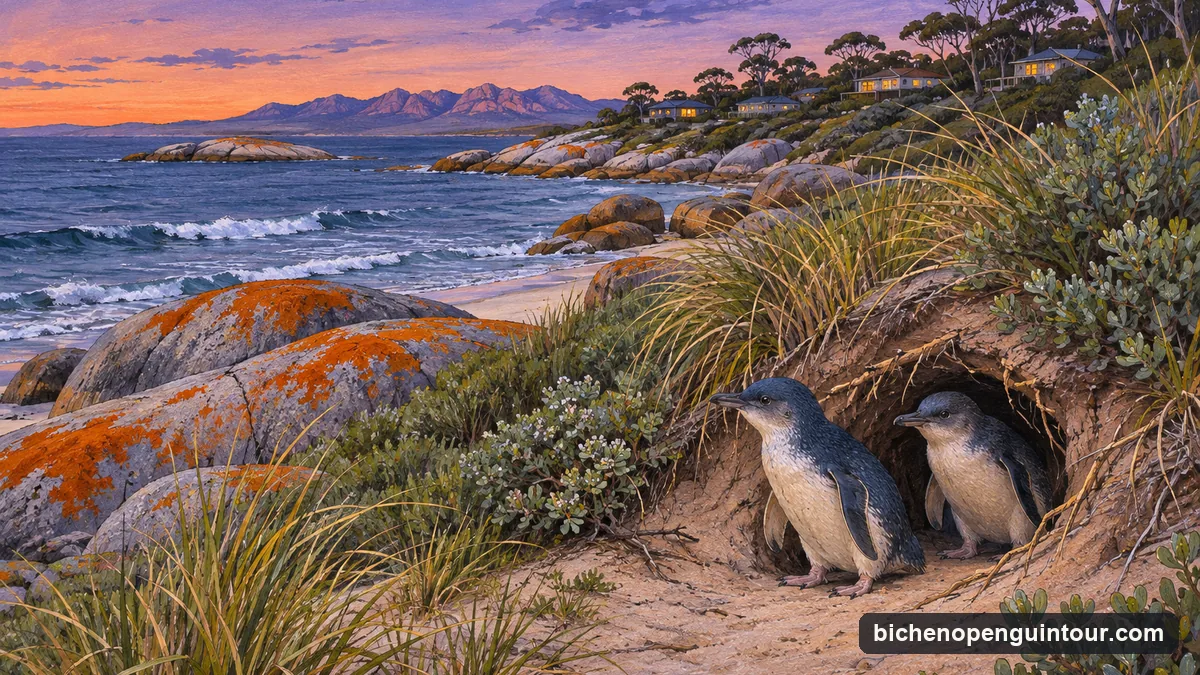
NRE Tas describes the evening the tour is built around. Before landing, groups of penguins gather beyond the surf, where you may hear them calling to each other; most come ashore in small groups within an hour or so of darkness, under its cover. If they sense a threat, or are disturbed by torchlight or loud noise, they stay at sea longer. Once ashore they walk to their burrows, and at the rookery the guide walks the group about 500 m over 50 minutes as they do, with seats along the way.
Chicks, nests and the moult
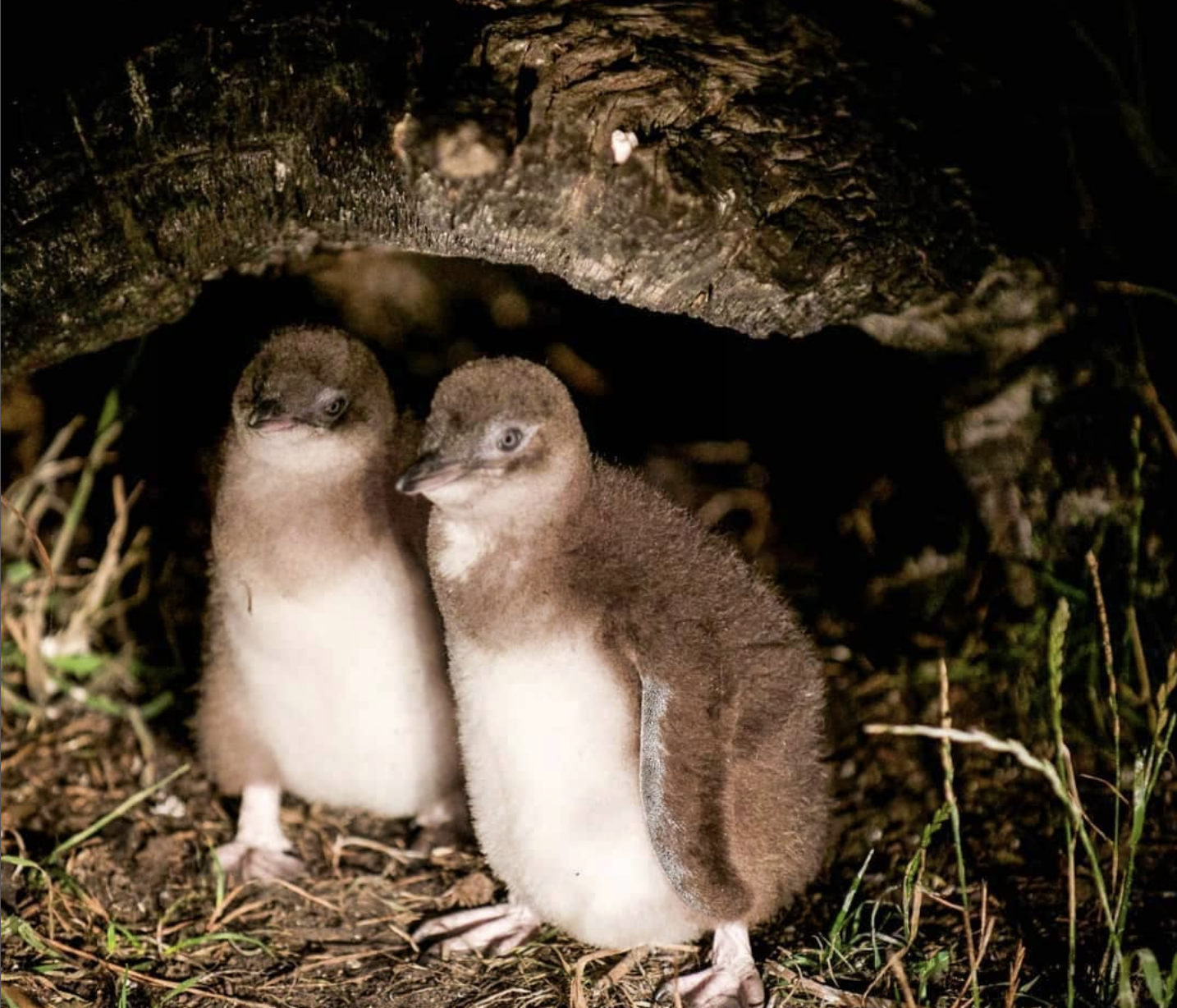
What the penguins are doing depends on the season. NRE Tas says breeding commonly starts in winter, when the birds come back to prepare their nests, and that a clutch of two eggs can be laid as early as May or as late as December; the eggs hatch after about 35 days, and the chicks fledge at about eight weeks. In the spring and summer breeding season at Bicheno the males are especially busy building burrows, and February is usually the moult, when the penguins are based more on land. Tourism Tasmania puts the best viewing at September to January. Tour times and the season has the months in a table.
Check dates for the penguin tour
The private rookery
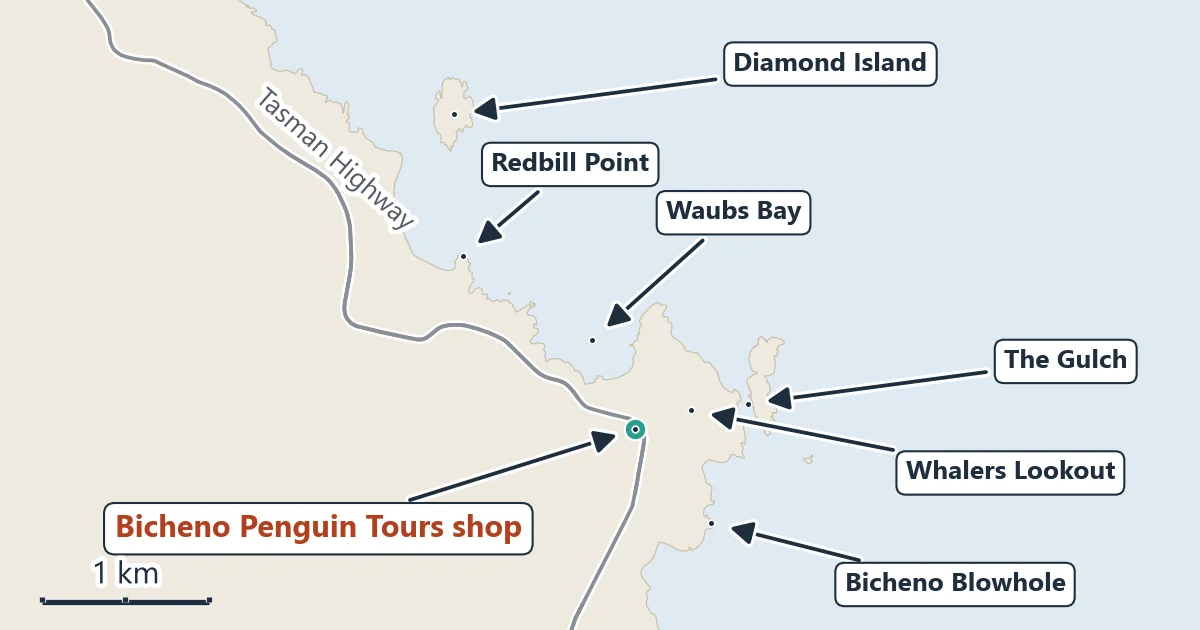
The tour does not use a public beach. Bicheno Penguin Tours was set up in 1992 by Paul Male and Nic Wardlaw, after repeated dog attacks in the early 1990s had cut the local colony to about 40 birds; since then the operator has bought farmland and turned it back into penguin habitat, and it says it monitors the colony around the clock. It calls it its tuminana rookery, and acknowledges the palawa people as the original custodians of the land it runs on. The law now protects the colony from dogs as well: NRE Tas says that since 2019 little penguins have been sensitive wildlife under Tasmania’s Dog Control Act, and the Bicheno shore from Rice Beach to Denison Beach, with Diamond Island and Governor Island, is a declared sensitive area.
The operator’s FAQ says penguin numbers dipped one summer and the penguins have since returned and are thriving, and it is running tours as normal.
How you watch them
The rules on the tour are the operator’s. Phones and cameras are welcome with the flash turned off, and flash photography is forbidden at every point of the tour; the operator offers a selection of its own photos free of charge. Wear enclosed shoes without prominent heels and warm clothes, and follow the guide.
NRE Tas’s penguin-watching guidelines, for any colony in Tasmania, say why: use only a dim red-light torch, and never point it at the water or the penguins; no flash cameras on the beach; never bring dogs or cats; watch from at least 3 m away without blocking the penguins’ way to their burrows; keep to existing tracks, because walking through a colony destroys burrows; wear dark clothing; and stay quiet, with as little movement as possible. Penguins are protected wildlife, and NRE Tas says it is illegal to catch, attempt to catch or harass them.
H5 bird flu has been found in Tasmanian wildlife since August 2026, including a little penguin on King Island; NRE Tas has set no restriction on penguin viewing, and asks everyone not to touch sick or dead birds or animals and to report them on 1800 675 888.
Tasmania: Bicheno Penguin Tour
The nightly tour from the shop on Burgess Street: the bus to the rookery, about 500 m on lit paths at dusk, and free photos afterwards.
Check dates →From Coles Bay: Wineglass Bay Cruise with Lunch
Pennicott Wilderness Journeys' Wineglass Bay cruise from Coles Bay, 38 km by road south of Bicheno, with lunch on board; the listing names penguins among the wildlife to look for.
See the Wineglass Bay cruise →Prices, ratings and review counts from the listings (GetYourGuide checked November 2026). Operators price by date and season, so treat the figures as the shape of the market, not a quote.
More on the East Coast
East Coast Tours with Open Dates
Tours around Bicheno and Freycinet with live availability. Times, what is included and cancellation terms are on each listing.
Watch Them Come Home
An hour at the private rookery at dusk, on lit paths with a guide, as the little penguins walk up from the sea to their burrows.
Check dates